What is changing, and when?
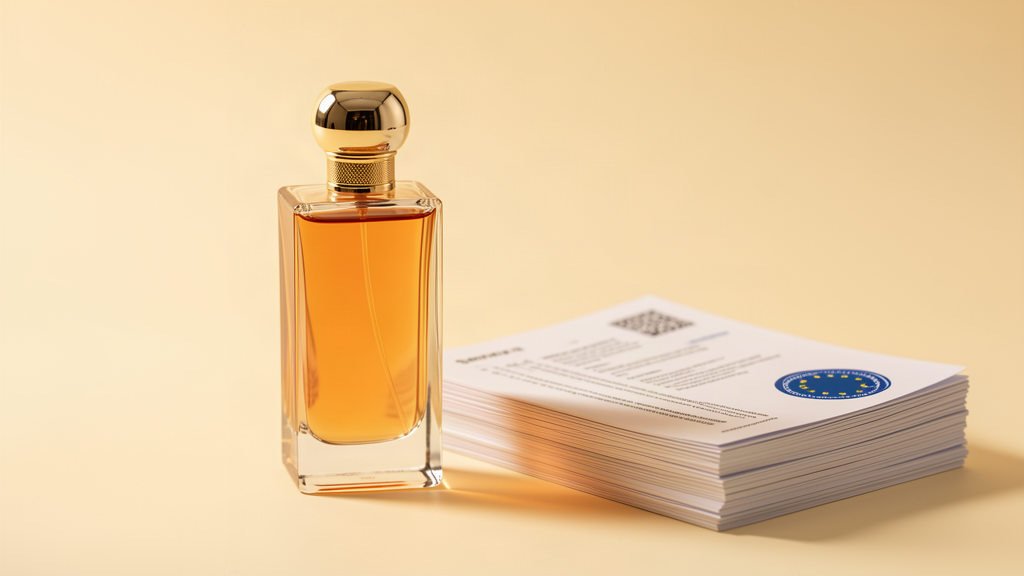
The EU Cosmetics Regulation (1223/2009) has required allergen disclosure for years, but only for 26 substances. Regulation 2023/1545 amends Annex III to expand that list to 82 fragrance allergens that must be individually named on the label if present above threshold concentrations.
This is not a ban. No ingredient is being prohibited. What's changing is transparency, the catch-all term "Parfum" (or "Fragrance") on an ingredient list has been a black box for decades. Starting August 2026, EU consumers will see exactly which allergens are present in their bottle, at what levels they appear, and from which sources.
The threshold for declaration is 0.001% in rinse-off products and 0.01% in leave-on products, perfumes are leave-on, so anything present above 0.01% must be individually listed. This is a low enough bar that virtually every complex fragrance will have multiple substances to declare.
What this looks like in practice: Today's label: Ingredients: Alcohol Denat., Aqua, Parfum, Linalool, the old minimum. Post-July 2026: Ingredients: Alcohol Denat., Aqua, Parfum, Linalool, Limonene, Citral, Coumarin, Eugenol, Farnesol, Geraniol, Citronellol, Amyl Cinnamal... and so on for every qualifying allergen.
The original 26 declared allergens already covered the most well-known sensitisers. The 56 additions cover a much wider range, including many that are the building blocks of modern perfumery. Here are the key categories:
Synthetic molecules now requiring declaration
Linalool, Limonene, Citral, Coumarin, Eugenol, Farnesol, Geraniol, Citronellol, Hydroxycitronellal, Amyl Cinnamal, Isoeugenol, Benzyl Alcohol, Benzyl Salicylate, Benzyl Benzoate, Cinnamyl Alcohol, Methyl 2-Octynoate
Natural ingredients that contain regulated allergens
Oakmoss Extract, Tree Moss Extract, Bergamot Oil, Lavender Oil, Rose Oil, Jasmine Absolute, Ylang Ylang Oil, Cinnamon Bark Oil, Clove Oil, Vetiver Oil, Patchouli Oil, Sandalwood Oil
Look at that list carefully. Linalool is present in lavender, bergamot, rose, and hundreds of synthetic accords, it's one of the most common fragrance chemicals on earth. Limonene is the molecule that makes citrus smell like citrus. Coumarin is the warm, hay-like sweetness in oriental and fougère fragrances. Eugenol is what makes cloves smell like cloves.
This regulation touches nearly every fragrance family. Florals (geraniol, citronellol), citrus (limonene, citral), orientals (eugenol, coumarin, farnesol), chypres (oakmoss), and woody fragrances (citronellol, farnesol) all contain substances on the list. There is no family that escapes.
💡 What collectors should understand: Declaration ≠ danger. These substances are allergens for a small percentage of people, the regulation is about informed consent, not safety. Most wearers will never have a reaction. But the labeling change creates an incentive for brands to reduce allergen concentrations to avoid long ingredient lists, and that reduction is what changes the smell.
Why This Hits Harder Than IFRA Restrictions
Fragrance collectors have watched IFRA (International Fragrance Association) guidelines restrict and reformulate beloved fragrances for decades. The EU allergen expansion is different in an important way: IFRA bans or limits ingredients; this regulation only requires disclosure.
But disclosure creates its own pressure. A brand with 12 allergens on its label faces consumer backlash ("this has 12 allergens?!") even if the fragrance is completely safe for 99% of wearers. The commercial incentive is to quietly reformulate, reduce allergen concentrations below declaration thresholds, to keep the ingredient list short and clean.
This is the mechanism that changes your fragrance without anyone telling you. The brand doesn't announce a reformulation. They simply adjust the formula to bring certain ingredients below 0.01%, and the next production batch smells different. Your 2025 bottle and your 2026 bottle of the same perfume are technically the same product with the same name, but the formula has changed.
⚠️ The reformulation trap: The most commonly reformulated notes under these pressures: oakmoss (chypres), bergamot (citruses), rose and jasmine absolutes (florals), cinnamon and clove (spicy orientals), coumarin (fougères and gourmands). If your favourite fragrance falls into these families, watch your batch codes after July 2026.
Which brands are actually exposed?
Here's what makes this more than a European story: several of the most popular brands in the Indian and Middle Eastern market have significant EU distribution. When they reformulate for EU compliance, their global production formula typically follows, and Indian consumers receive the reformulated version.
| Brand | EU Presence | Reformulation Risk | Most Exposed Fragrances |
|---|---|---|---|
| Lattafa | Strong, major EU retailers | High | Oud-heavy and spicy orientals (Bade'e Al Oud, Raghba) |
| Rasasi | Moderate, selective EU distribution | High | Florals and oud-florals (Hawas line, Dhan Al Oudh) |
| Armaf | Strong, Armaf has significant EU retail | High | Club de Nuit Intense, Venetian Vibes (bergamot-heavy) |
| Afnan | Growing, online EU presence | Medium | Oud-based line, 9AM (citrus-forward) |
| Al Haramain | Moderate, online and boutique | Medium | Amber Oud Shop ↗, Madinah (oud and rose heavy) |
| Ajmal | Established, long EU presence | High | Dhan Al Oudh, Evoke (citrus + floral) |
| Indian niche brands | Limited, mostly direct export | Low-Medium | Depends on EU export volume |
Brands with lower EU exposure (sold primarily in GCC and India) have less direct pressure to reformulate. But suppliers of raw ingredients are also adjusting, meaning even brands without EU ambitions may receive reformulated ingredient batches from their fragrance houses.
Does this affect bottles you already own?
The FragranVerse database tracks 8,000+ perfumes with note compositions, performance ratings, olfactory family classifications, and reformulation flags. Looking at the data, reformulation already affects how fragrances perform, most major chypre and oriental reformulations of the last decade can be traced through performance drops in community ratings. The EU 2026 wave is about to create the next chapter of that pattern.
Here's what to do with that knowledge:
This isn't a switch that flips on August 1, 2026. Reformulation is a production cycle process that has already begun. Here's the realistic sequence:
- 2023-2024: Brands audit their formulas Major houses with EU exposure began internal allergen audits when the regulation was finalised. This is when the decision to reformulate, or accept the longer label, gets made.
- Early 2025: Formula R&D begins Brands that chose to reformulate start working with their fragrance suppliers to bring allergen levels below declaration thresholds while preserving the character of the scent.
- Mid-2025 to early 2026: New batches enter production Reformulated formulas begin rolling out in production. These reach shelves as existing stock sells through, creating a transition window where old and new batches coexist.
- July 31, 2026: Hard deadline New products placed on the EU market must carry the compliant label. EU retailers must clear old stock or relabel.
- August 2026 onwards: Global rollout Reformulated batches become the global production standard for most brands. Indian and GCC markets start receiving the new formula.
- Late 2026-2027: The community notices Reviews start appearing comparing old vs new batches. Collector communities flag performance differences. Prices for pre-2026 batches rise on secondary markets.
What should you do about it?
Buy now if these are in your rotation
If you own a fragrance that you love in its current form and it falls into a high-risk category, especially heavy chypres, dark orientals, oud florals, or anything bergamot-forward, consider buying an extra bottle of the current batch before mid-2026 batches become dominant. This is especially relevant for Lattafa Bade'e Al Oud, Armaf Club de Nuit Intense, and any Ajmal or Al Haramain oud-floral that you rate highly.
How to tell which batch you're getting
Batch codes are printed on the bottle bottom, often in a format like L2B026 (where digits indicate the production year and batch). For EU-compliant reformulations, the batch code will typically change alongside a new label. Compare batch codes when buying online or from a retailer, same product name, different batch code = potentially different formula. Communities like r/DesiFragrance track batch differences for popular releases.
The opportunity: EU-labelled bottles are a marker
From August 2026, EU-sold bottles will list individual allergens. This is actually a buyer's tool, you can look at the declared allergens and infer the note composition with more precision than ever. A bottle declaring oakmoss, linalool, and eugenol tells you it's a real chypre with natural materials. A bottle with a short allergen list tells you it's been cleaned up. This turns the EU label into an unintended quality signal for educated buyers.
The Positive Side: You'll Finally Know What's in the Bottle
It's tempting to see this as just loss, reformulations change beloved fragrances, the classic versions disappear, and collector culture mourns what was. That's real, and it's happened before (the oakmoss restrictions that killed classic chypres in the 2010s still sting for many collectors).
But the transparency argument is worth something. The fragrance industry has operated behind a "trade secret" shield for decades. Brands don't have to tell you what's in their perfume. The EU regulation cracks that open, not fully, but meaningfully. You will know if your oud fragrance is using real oud-derived materials (which would trigger farnesol, eugenol, or other allergen declarations) or a synthetic substitute. You'll know if your bergamot-forward fresh scent is built on real bergamot or a synthetic citrus accord.
For educated collectors, this is a data upgrade. It won't make your favourite fragrance smell better if it gets reformulated, but it gives you far more information to make buying decisions with.
- EU Regulation 2023/1545, Official EUR-Lex text, the full regulation amending Cosmetics Regulation 1223/2009, Annex III expansion from 26 to 82 allergens.
- EU Cosmetics Regulation 1223/2009, the base regulation governing cosmetic safety in the EU.
- FragranVerse Database, 8,000+ perfumes with note compositions, performance ratings, and reformulation tracking.
Compare these against your current shelf on FragranVerse. Check note overlaps, find alternatives, and see what the community thinks.
Check a bottle on FragranVerse →