Fragrance Note
Tonka Bean
Used in 928+ fragrances on FragranVerse
What it smells like
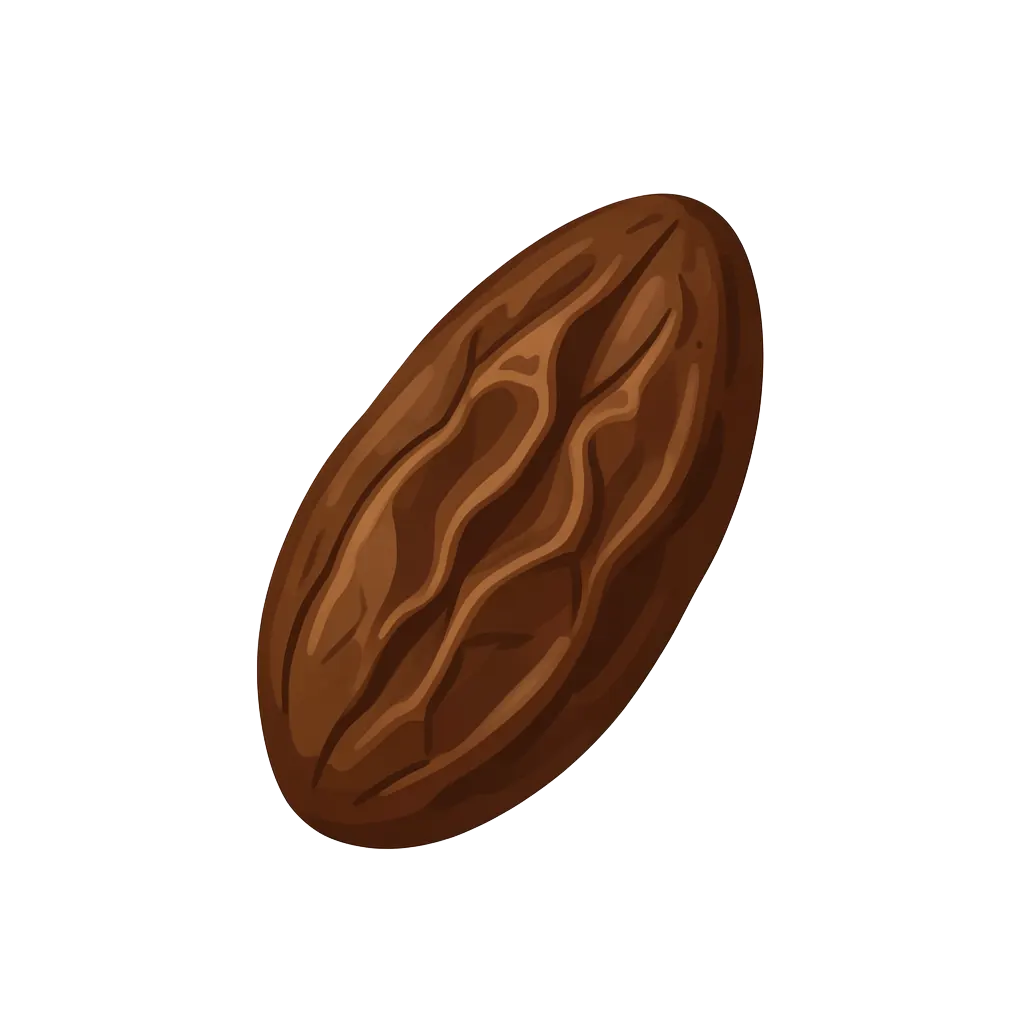
Tonka bean is the seed of Dipteryx odorata, a tropical tree native to northern South America. Principally Venezuela, Colombia, Brazil. The cured beans are dark, wrinkled, almond-shaped, and carry a distinctive dried-hay, vanilla-tobacco, slightly bitter-almond aroma owing principally to coumarin, which can crystallize on the surface of fresh beans as a white efflorescence. Tonka bean absolute (solvent-extracted) contains 25. 50% coumarin alongside hydroxycoumarins, β-caryophyllene, eugenol, and a small fraction of fatty acids and other minor constituents.
How it's used in perfumery
Coumarin is structurally non-negotiable in three fragrance families. In the fougère (lavender + oakmoss + coumarin), it is the third pillar. Remove it and the accord collapses. In amber and amber compositions (vanilla + coumarin + labdanum), it softens balsamic density and bridges the gap between sweet and resinous. In tobacco constructions, it provides the warm hay-like sweetness that reads as cured leaf. Functionally, coumarin acts as a fixative with substantial tenacity. Extending the presence of more volatile materials in the heart and top without adding heaviness.
Fun fact
Coumarin was isolated twice in 1820 by two chemists who did not know about each other's work. A. Vogel in Munich extracted it from tonka beans but mistook it for benzoic acid. Guibourt in Paris independently isolated the same compound, recognized it was something new, and named it coumarine. From coumarou, the Tupi word for the tree.