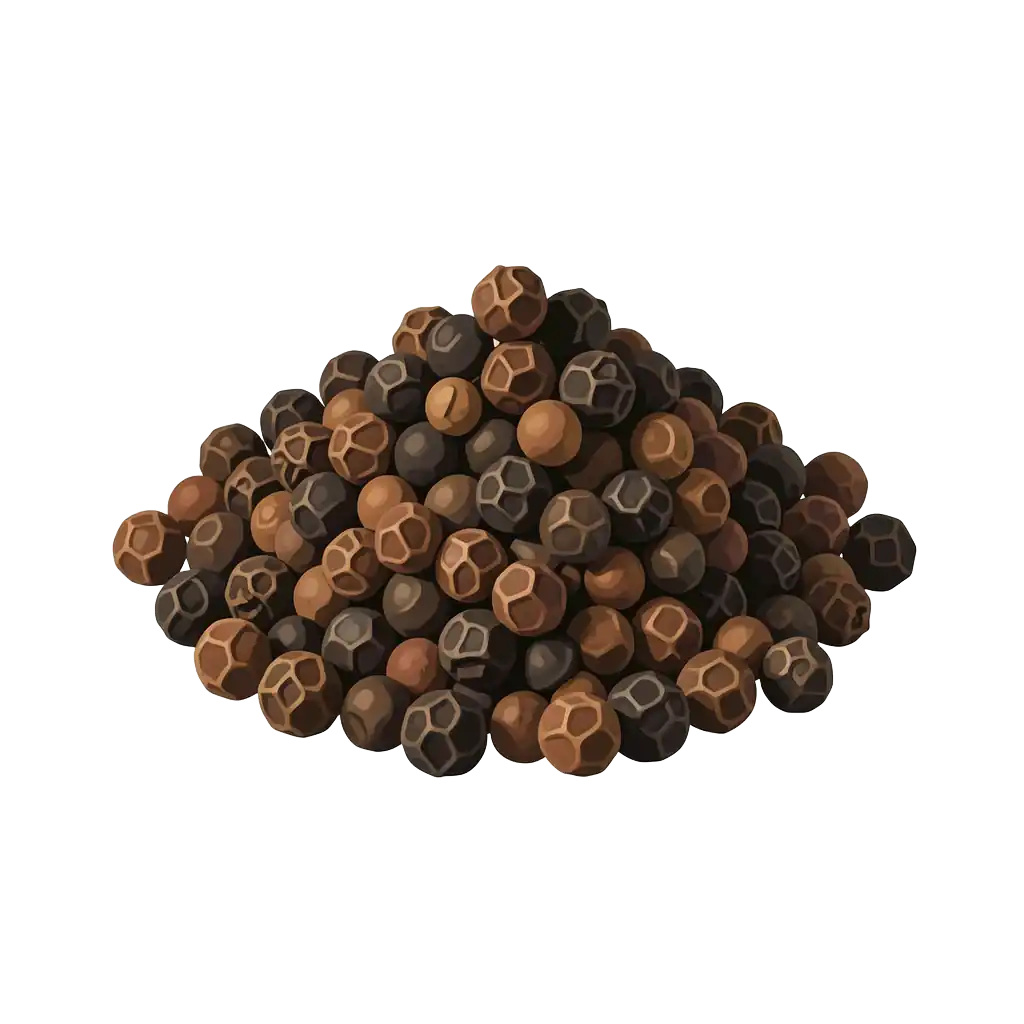
Fragrance Note
Black Pepper
Used in 552+ fragrances on FragranVerse
What it smells like
Steam distillation of black pepper removes piperine (the compound that causes tongue-burning pungency) and retains only the volatile fraction. Monoterpenes and sesquiterpenes that smell warm, woody, and faintly citric. The oil's backbone is beta-caryophyllene, which provides a dry, woody character, while compounds like sabinene and limonene add terpenic freshness. Rotundone, present at trace levels (~55 ppm), is actually responsible for the perception of pepperiness, with an extraordinarily low detection threshold. Origin matters: Malabar pepper produces a complex oil, Sri Lankan is cleaner, Madagascan is fruitier, and Sarawak is milder.
How it's used in perfumery
Black pepper oil functions as a top-to-heart diffuser and textural modifier, introducing dry, radiant warmth that lifts surrounding materials and sharpens dull accords without sweetness. Beta-caryophyllene acts as a natural fixative, extending the presence of volatile materials. It's structurally important in aromatic fougères, fresh spicy masculines, and modern woody-amber compositions, bridging naturally between citrus notes and woods like vetiver and cedar.
Fun fact
The compound that makes pepper smell peppery is not piperine (the molecule that burns your tongue) but rotundone. A sesquiterpene present at only about 55 parts per million, with a detection threshold of around 16 nanograms per liter in water.