Fragrance Note
Lavender
Used in 1302+ fragrances on FragranVerse
What it smells like
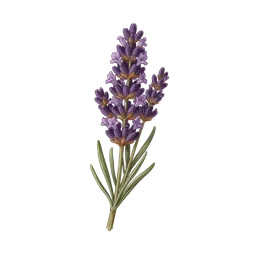
Two plants, one name. True lavender (Lavandula angustifolia) grows above 600 meters on the calcareous soils of Haute-Provence, in the Balkans, and in parts of England. Its essential oil is dominated by linalool (25-38%) and linalyl acetate (25-38%) per ISO 3515. The linalool delivers the fresh-floral lift; the linalyl acetate, a sweet, almost bergamot-like softness. Together they produce a scent that is herbaceous, slightly camphoraceous, and cleaner than any flower has a right to be. Lavandin (Lavandula x intermedia). A sterile hybrid of true lavender and spike lavender. Yields five to six times more oil per hectare. Its higher 1,8-cineole content makes it sharper, more eucalyptus-adjacent, more aggressive. Lavandin Grosso, which accounts for roughly 80% of all lavandin cultivation in Provence, is the workhorse behind soaps, detergents, and functional products.
How it's used in perfumery
Lavender is the structural top-to-heart note of the fougere family. The fougere accord. Lavender, coumarin, oakmoss. Has generated more masculine fragrances than any other formula in perfumery history, beginning with Fougere Royale (1882). Beyond fougeres, lavender appears in aromatic-citrus colognes, where it bridges citrus freshness and herbal warmth, and in aromatic-woody compositions where it provides diffusion and a clean opening. Its primary components (linalool, linalyl acetate) give it natural affinity with bergamot, geranium, clary sage, and rosemary.
Fun fact
Haute-Provence fine lavender essential oil received its AOC (Appellation d'Origine Controlee) in 1981, upgraded to AOP (Appellation d'Origine Protegee) in 2005. The only essential oil in France protected by an origin designation.
Perfumes with Lavender(80 of 1302)
Indian
(10)
Middle East
(54)