Fragrance Note
Beeswax
Used in 23+ fragrances on FragranVerse
What it smells like
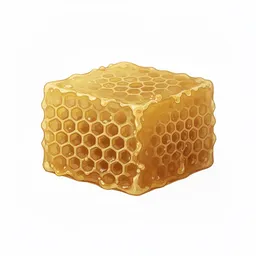
Beeswax absolute is among the most expensive natural materials in perfumery. It is obtained not by distillation. The wax is too inert. But by solvent extraction of honeycomb wax from Apis mellifera, followed by alcohol precipitation and a freeze-filtration process (glacé) that discards roughly 75% of non-aromatic wax. What remains is a viscous, dark amber concentrate that captures the full aromatic memory of the hive. The smell is not honey. It is drier, waxier, more intimate. Closer to melted candles than to a honey jar. The key volatile odorants, identified by GC-MS analysis, are dominated by linear aldehydes: decanal (approximately 50% of the volatile fraction), nonanal, and octanal, which together produce the characteristic waxy-aldehydic quality. Phenylacetic acid contributes the honeyed sweetness. Furfural and benzaldehyde add faint caramellic and almond-skin undertones. The non-volatile matrix. Myricyl palmitate esters, cerotic acid, melissic acid. Provides the tenacious, skin-clinging fixative quality.
How it's used in perfumery
Base-note fixative of notable tenacity (TGSC rates substantivity at 400 hours). Functions as a warm anchor and honeyed modifier. Essential in tobacco, amber, and Amber compositions, where it provides a natural golden warmth that synthetic alternatives approximate but rarely match in complexity. Particularly effective beneath white florals. Tuberose, jasmine, gardenia. Giving them a lived-in, skin-warm quality rather than a clean-laundry effect. Works with labdanum, castoreum reconstructions, frankincense, vanilla, and tonka bean. Synthetic honey accords typically combine phenylacetic acid (the key honeyed odorant in beeswax itself), eugenol, methyl phenylacetate, and traces of phenylacetaldehyde and methyl anthranilate. These reconstruct the honeyed quality but lack the waxy-aldehydic backbone of the natural absolute.
Fun fact
In Whitcomb's 1946 experiment. Still the standard reference. Bees consumed between 6.66 and 8.80 kg of honey to produce a single kilogram of wax. The wax is secreted as translucent scales, each weighing about 1.1 mg, from four pairs of glands on the ventral side of worker bees aged 12. 20 days. Approximately 1.1 million scales are needed to build one kilogram of comb.
Perfumes with Beeswax(22 of 23)
Middle East
(2)Designer
(8)Niche
(12)