Fragrance Note
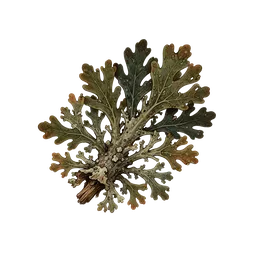
Oakmoss
Used in 564+ fragrances on FragranVerse
What it smells like
Oakmoss is a lichen, not a moss. Evernia prunastri is a symbiotic organism. Fungus wrapped around algae. That colonizes oak bark, conifers, and stone walls across the temperate northern hemisphere. The bulk of commercial harvest comes from North Macedonia, Morocco, and the Balkans. The smell is earthy, damp, phenolic. Composted green with a leathery undertone and faint iodine quality. Drier than patchouli, less sweet than vetiver, more astringent than either. EU Regulation 2017/1410 banned atranol and chloroatranol, potent allergens formed during extraction, limiting oakmoss use in finished products.
How it's used in perfumery
Oakmoss is the structural base of two fragrance families: the chypre and the fougère. In the chypre, it is not a note but the architecture, functioning as a fixative and textural anchor. Post-regulation, the oakmoss effect is reconstructed using Evernyl, a synthetic substitute, combined with IFRA-compliant treated oakmoss absolute and treemoss. Vetiveryl acetate and patchouli heart fractions are sometimes layered in to restore the earthy depth lost during allergen-stripping.
Fun fact
Atranol and chloroatranol. The molecules that triggered oakmoss regulation. Are not originally present in the living lichen. They are degradation products of atranorin and chloroatranorin, formed during the extraction process itself.
Perfumes with Oakmoss(80 of 564)
Indian
(8)Middle East
(20)

Designer
(30)
Niche
(22)